About AFRICAST
Course overview
Forecasting is a valuable tool that allows organisations to make informed decisions about the future. Time series forecasting, in particular, uses historical data to predict future trends over time. This technique has extensive applications across a wide range of fields, including finance and economics, health and humanitarian operations, supply chain management, and more. By analysing trends and patterns in data, time series forecasting can help decision-makers identify potential challenges and opportunities, and plan accordingly.
It is important for researchers in Low- and Middle-Income Countries (LMICs) to develop technical skill in data analysis and forecasting techniques, which are essential for accurate and reliable forecasting. By having these skills, researchers can analyse data, identify trends and patterns, and develop robust forecasting models to make informed decisions that can improve resource allocation and planning in LMICs. Additionally, researchers can collaborate with policy makers and stakeholders to ensure that the forecast results are integrated into decision-making processes, leading to more efficient and effective resource management strategies.
This workshop is part of the Forecasting for Social Good (F4SG) initiative, and will run online from the 19th-23rd October 2026.
Educators
Mitchell O’Hara-Wild
 Mitchell O’Hara-Wild (he/him) is a PhD candidate at Monash University, creating new techniques and tools for forecasting large collections of time series with Rob Hyndman and George Athanasopoulos. He is the lead developer of the tidy time-series forecasting tools fable and feasts, and has co-developed the widely used forecast package since 2015. Mitchell also operates a data consultancy, and has worked on many forecasting projects that have supported decision making and planning for businesses and governments. He is an award-winning educator, and has taught applied forecasting at Monash University and various forecasting workshops around the world.


Bahman Rostami-Tabar
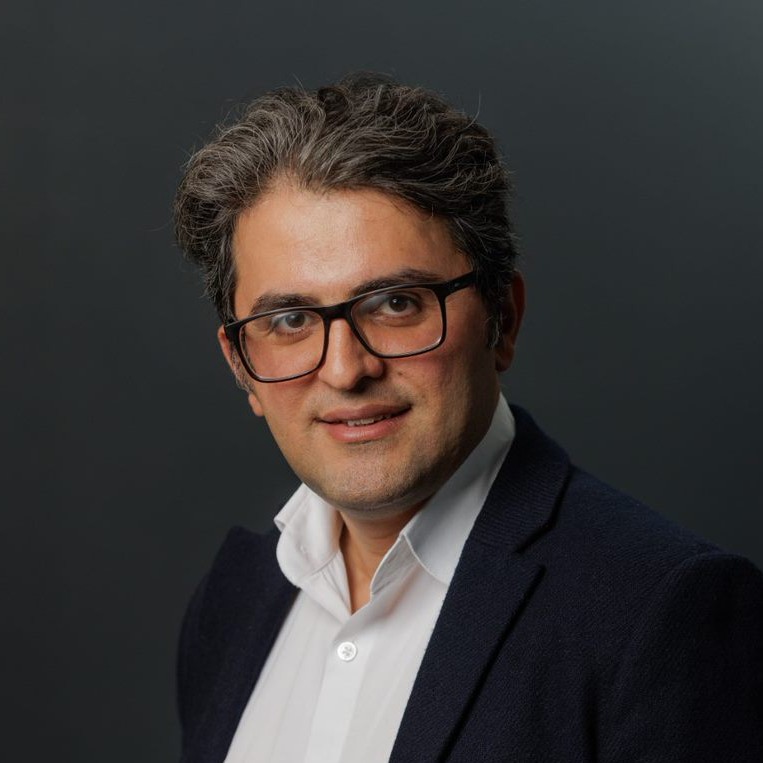 Bahman is the Professor of Data-Driven Decision Science at Cardiff Business School, Cardiff University, UK. He is interested in transforming data into insights for making smart decisions. Bahman is the founder and director of Data Lab for Social Good Research Group at Cardiff University and the founder of Forecasting for Social Good committee initiatives sponsored by the International Institute of Forecasters. He is also leading the “Uncertainty & the Future” theme at the Digital Transformation Innovation Institute.
Bahman specialises in the development and application of modelling, forecasting and management science tools and techniques providing informed insights for planning & decision-making processes in sectors contributing to social good, including healthcare operations, global health and humanitarian supply chains. His collaborative efforts have spanned a multitude of organisations, including notable bodies such as the National Health Service (NHS), Welsh Ambulance Service Trusts (WAST), United States Agency for International Development (USAID), the International Committee of the Red Cross (ICRC), and John Snow Inc. (JSI). A remarkable highlight of his contributions is his pivotal role in disseminating forecasting knowledge especially in low and lower-middle income countries through the democratising forecasting project sponsored by International Institute of Forecasters.

Abiodun Egwuenu
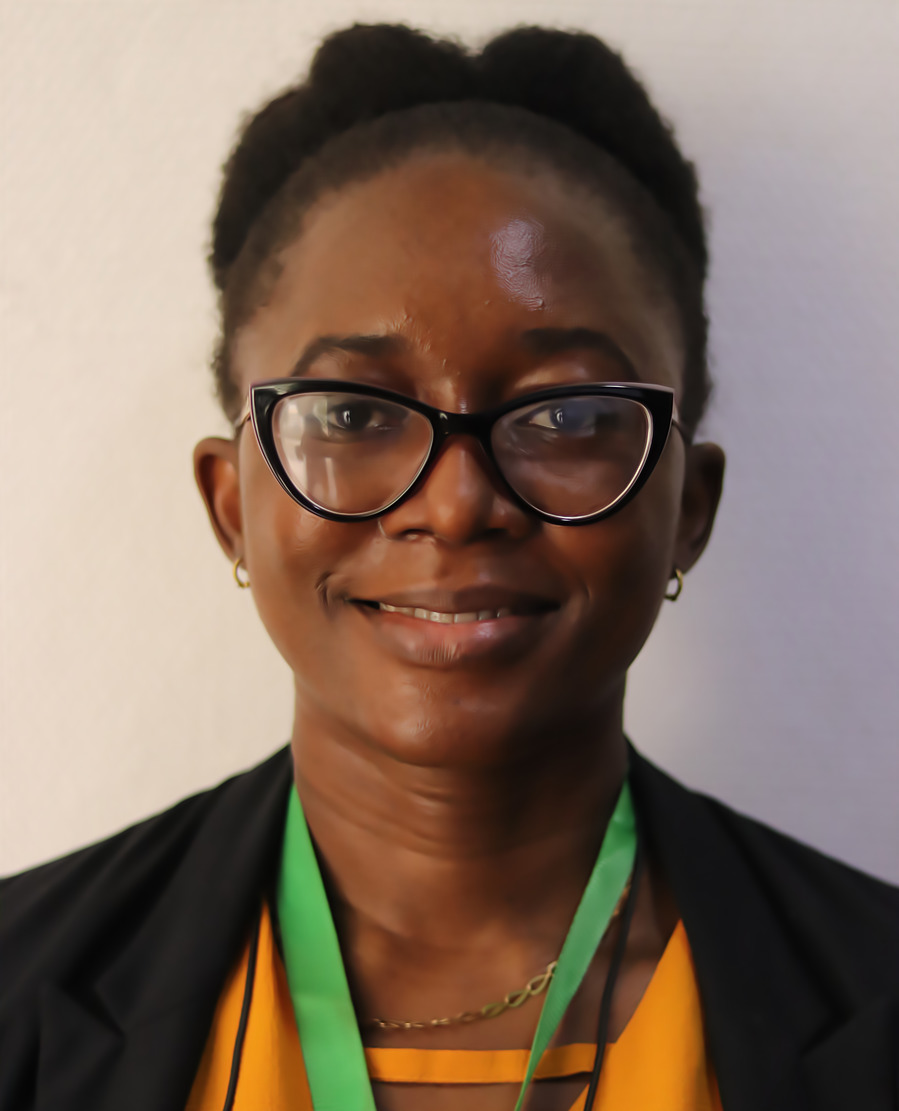 Abiodun Egwuenu is a medical doctor, field epidemiologist, and researcher specialising in antimicrobial resistance (AMR), data science, and public health policy. She is an International Society for Infectious Diseases Emerging Leader in Infectious Disease Research and a graduate of the Nigeria Field Epidemiology and Laboratory Training Programme. Her professional experience spans the national coordination of Nigeria’s AMR surveillance programme, the Intermediate Field Epidemiology Training Programme, and leadership of infectious disease outbreak responses. She served as the national lead for Nigeria’s mpox response, facilitating surveillance and public health response during the 2022/2023 pandemic.
She is currently a PhD candidate at Charité – Universitätsmedizin Berlin, Germany. Her doctoral research uses ten years of surveillance data from Nigeria to analyse and model the spatial and temporal dynamics of antimicrobial resistance, generating evidence to strengthen public health interventions, improve surveillance strategies, and inform effective policy responses to AMR. In addition to her research, she serves as Vice Chair of the Board of Members of Applied Epi, where she supports the organisation’s mission to strengthen applied epidemiology through accessible, R-based training.
Harsha Halgamuwe Hewage
 Harsha Halgamuwe Hewage is a researcher at the Data Lab for Social Good, Cardiff Business School, Cardiff University. His work focuses on forecasting and decision support under uncertainty, particularly in public health supply chains, demand forecasting, inventory planning, and time series foundation models. He works with organisations including JSI, USAID, the Ethiopian Pharmaceutical Supply Service, and the HISP Centre at the University of Oslo, with a focus on translating forecasting research into practical tools and approaches for public health decision making.
Harsha is also involved in Forecasting for Social Good (F4SG) and contributes to its training and capacity-building activities. He delivers forecasting training for public health practitioners, researchers, and government organisations, including recent training activities in Ethiopia and Rwanda. His current work also looks at the use of AI and time series foundation models in forecasting, and how these methods can be used responsibly in public health supply chains. He is also part of the Data Lab for Social Good team working on forecasting avoidable patient harm with the NHS, following the team’s joint first-place result in the 2026 NHS SPHERE-PPL forecasting challenge.
Mustafa Aslan
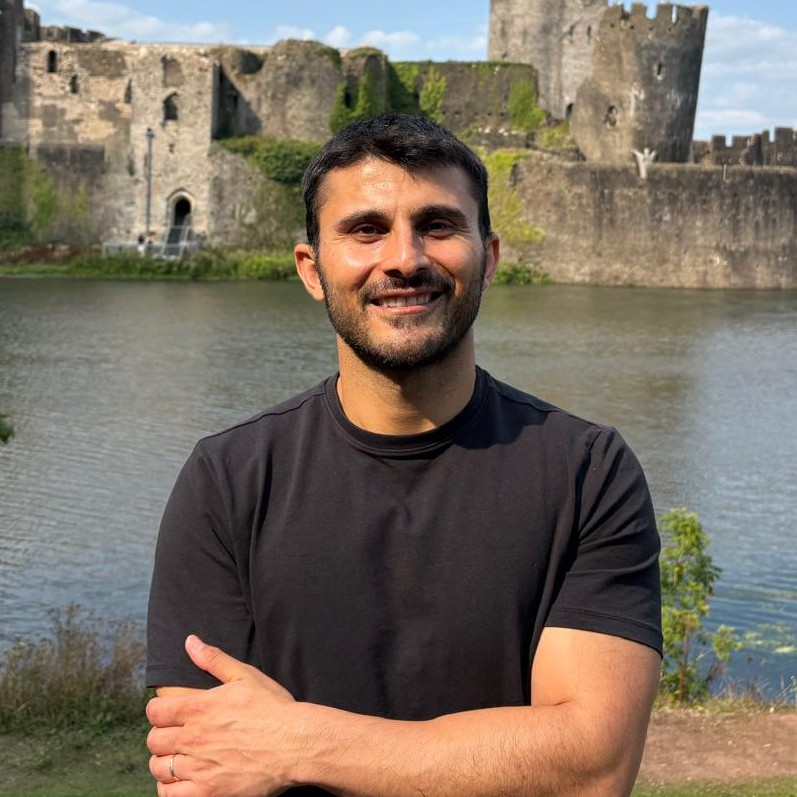 Mustafa Aslan is a third-year PhD researcher in the Data Lab for Social Good Research Group at Cardiff University, UK. His research focuses on reducing delays and inefficiencies in hospital discharge processes and patient flow. Specifically, he works to improve discharge care coordination and operational effectiveness, including workforce planning and patient care delivery. To achieve this, he develops decision-making frameworks that integrate probabilistic forecasting models with sequential optimisation techniques. His work also leverages machine learning-based causal inference methods to provide actionable insights for healthcare providers and administrators on the factors contributing to discharge delays and inefficiencies.
In addition to his PhD work, he is passionate about mathematical modelling and uncertainty quantification to address complex real-world challenges. He also builds reusable Python packages and is the developer of peshbeen, an open-source forecasting package that helps users forecast using both statistical and machine learning models within a single pipeline, as well as generate probabilistic forecasts using various techniques. Furthermore, he is part of the Data Lab for Social Good team working on forecasting avoidable patient harm with the NHS, following the team’s joint first-place result in the 2026 NHS SPHERE-PPL forecasting challenge.
Planning team
The workshop is organised behind the scenes by a dedicated planning team, who volunteer their time to coordinate logistics and ensure the workshop runs smoothly. The team includes:
- Mkajuma Charity
- Kennedy Mung’are
- José Thiéry Hagbe
Mentors for the cohort 2026
A committed team generously dedicates their time and expertise to offer valuable support to learners throughout the duration of the workshop to help learners with the exercises. The team includes:
- Samson Oluwafemi
- Oluchukwu Aghadi
- Lumumba Victor
- Adamu SAIDU Saleh
- Akoeugnigan Idelphonse SODE
- AKOUNDA Badjibassa
- Caroline Mugo
- Winnie Chacha
- Matabel Odin
Coordinator
The workshop is coordinated by:
- Henry Kissinger Ochieng